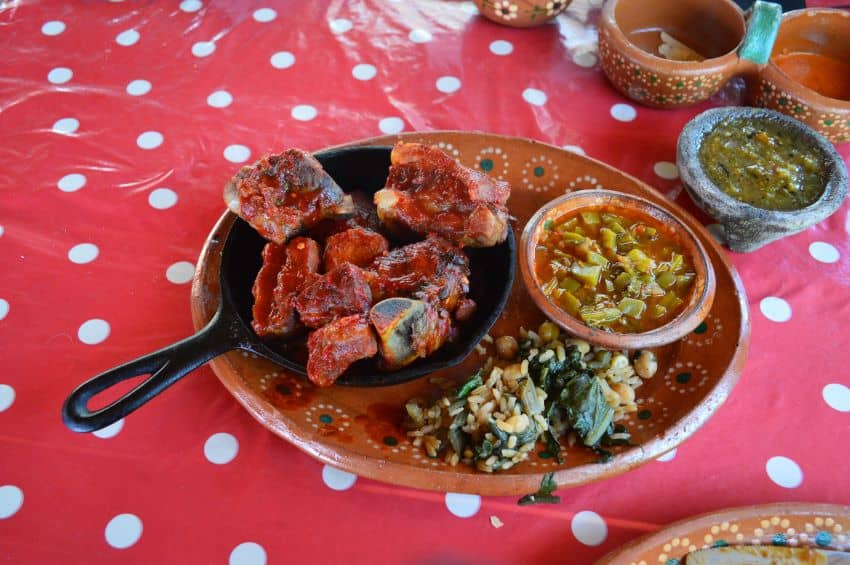
Less closely guarded but just as culturally sustaining are culinary traditions. While capeyuye feeds the spirit and connections to the ancestors, food sustains the body and close connections of present day existence.
Deep South and Mexican food and preparation techniques merge to form their own flavor of both in El Nacimiento. Some visitors remark on the array of foods themselves as evidence of the union of traditions, pointing to things like ribs and potato salad being served alongside chili colorado and empanadas.
Laura Herrera
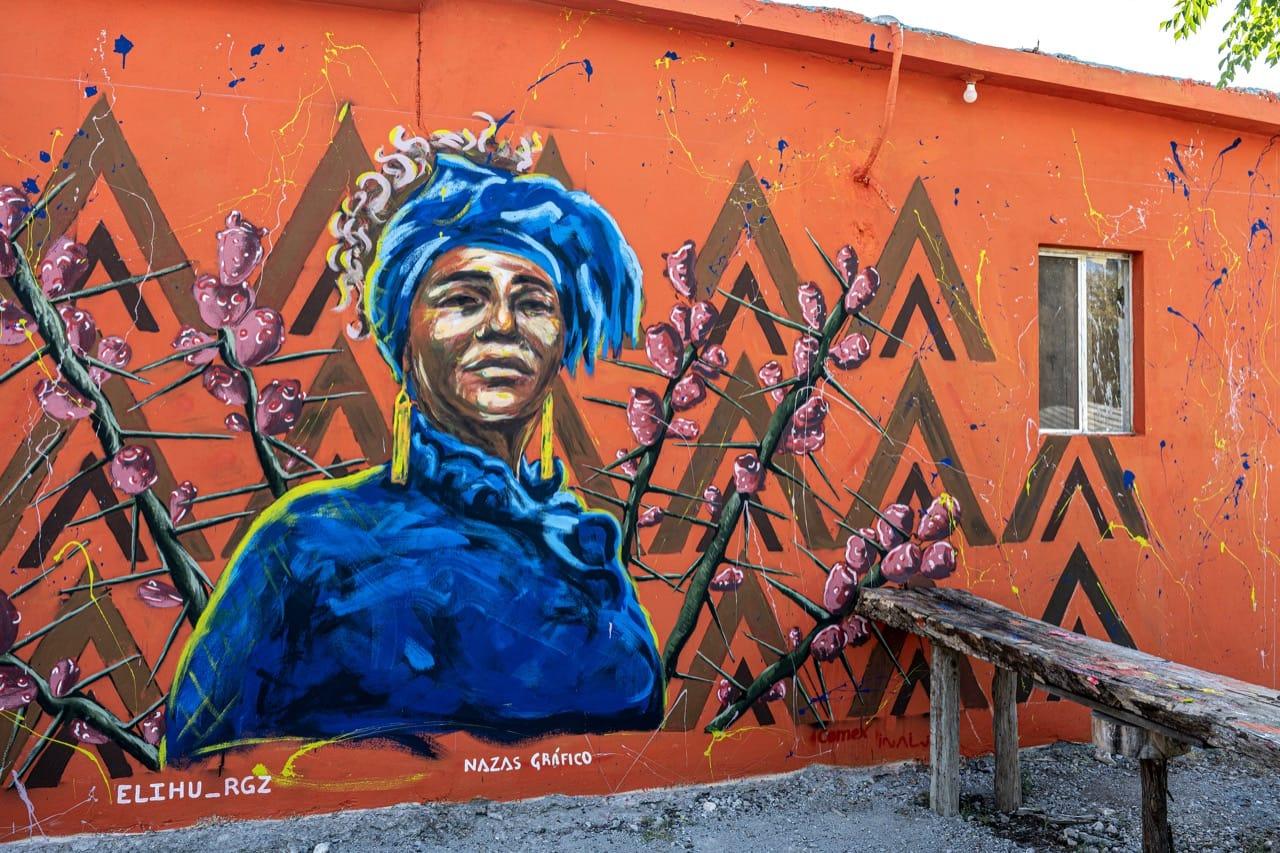
Laura Herrera is the custodian of what’s cooking culturally in El Nacimiento and, like Gertrudis, is featured in the town murals. Celebrated locally by her peers and further afield by scholars and anthropologists, Laura has taken up the mantel of cultural preservation using traditional cookware.
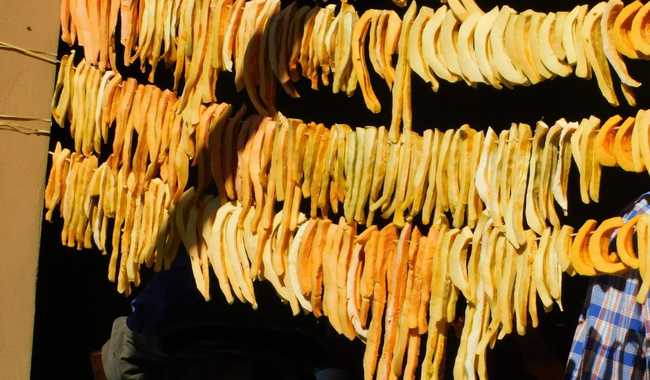
Laura won a traditional foods competition with her grandmother's recipe for orejones de calabaza. These dried strips of pumpkin can be prepared sweet or savory, but either way remind Laura of her abuela.
The photo below is of the strips of pumpkin Laura has hung out to dry. Click the image to learn more.
Laura is outspoken and passionate about her cooking and the survival of her tribe's traditions. She believes educating others about her people's customs and stirring interest in cultural tourism is what will most help in keeping the traditions alive and passing on to new generations. Laura takes part in interviews with outsiders about the Mascogo experience, including tackling the sensitive subjects of skin tone. She has been accused of not being dark enough to be a Negra Mascoga but insists she doesn't care about such thoughts--she knows who her family is, what her traditions are and where her heart is and to her that's what matters. Her culture is in the life she lives every day, in the cooking and food production that sustains her and her family.
Laura has been interviewed numerous times by journalists and scholars alike. An extensive example of the traditional cooking process was shared with anthropologist Karla Rivera. The brief documentary follows Laura as she makes from scratch traditional pumpkin empanadas.