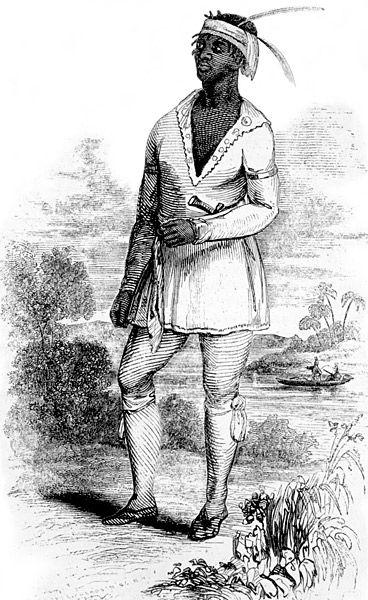
Following the orders of President Polk and the U.S. Army to return refugees back to their enslavers, John Horse defied those orders and moved his people south to a tract of land on Wewoka Creek by the North Canadian River. Ever optimistic this would finally their permanent home, the people built permanent split log cabins just as they used to live in while in Florida. It was not long before they were besieged by slavers and again forced to abandon homes and crops in pursuit of somewhere safer.
Word of Mexico's promise of freedom from such institutions were murmured throughout the American South and Indian Territory. The journey came with serious risks. It would be too arduous for any physically handicapped, meaning elders would again have to be left behind. It would mean not only evading white slavers the whole way down, but also Creeks on the way out of Indian Territory, and Apache and Commanche raiders further south.
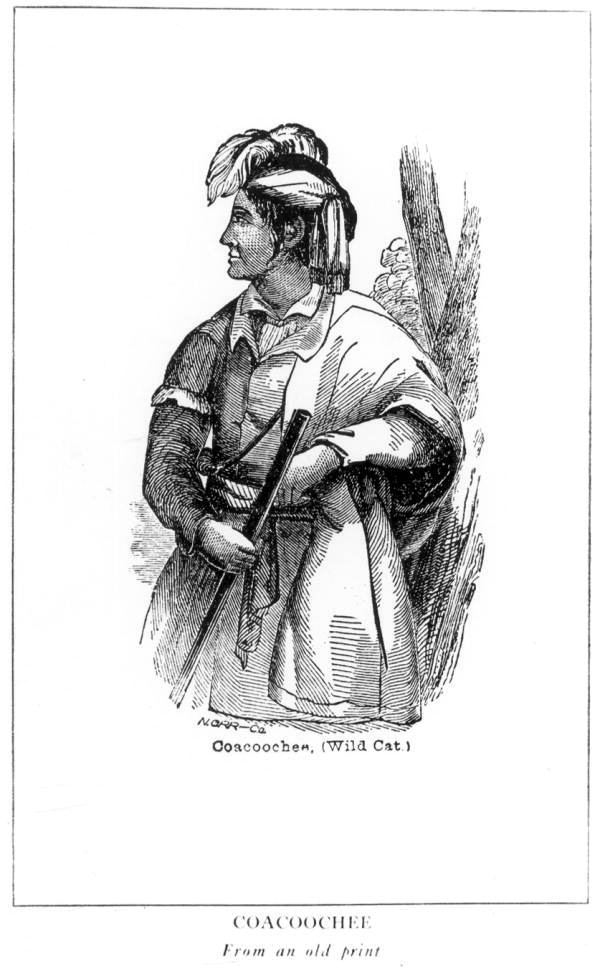
So entered Wild Cat, the ambitious Seminole friend of John Horse who had his eye on Mexico as a prime place to build a Seminole settlement far away from Creek influence (and one that would make him primary chief, obviously). Between 1845 and 1846 Wild Cat made several trips to Mexico to negotiated with officials there for land in exchange for services.
Northern Mexico was under constant attack by raiders and attempts by the government to encourage people to settle there regularly failed--no one wanted to build a hacienda that would be constantly robbed and voluntarily live under such persistent threat. Wild Cat scouted the land on his multiple trips (all of which were taken under the pretense of hunting), looking for routes to the border and ideal settlement locations for his people. Mexican officials assured Wild Cat that if they helped fight the raiders and come to settle in Mexico, they would be granted citizenship and rights equal to that of white colonists. It was too tempting an offer to pass up in Wild Cat's estimation, and John Horse agreed.