Indian Removal
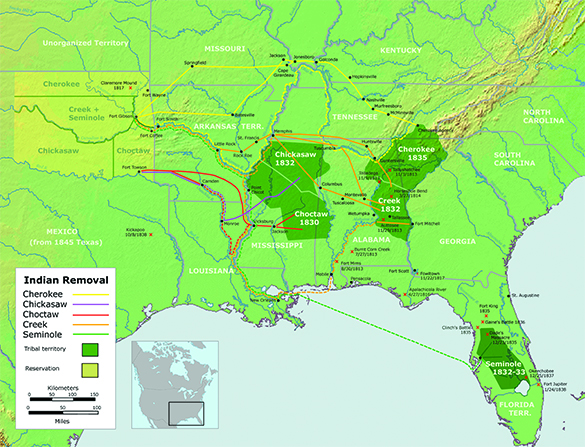
In 1819, the United States purchased all of Florida from Spain. A decaded later, President Andrew Jackson ordered the forced removal of the Five Tribes (Cherokee, Muscogee or Creek, Choctaw, Chickasaw, and Seminole) to Indian Territory in present-day Oklahoma. The Seminoles staunchly refused and the ensuing fighting between their warriors and the US army became known as the Second Seminole War. The guerrilla-style combat utilized by the Seminoles in the wetlands of Florida made them difficult and costly for the U.S. Army to contend with. Brutal tactics ensued.
The Second Seminole War
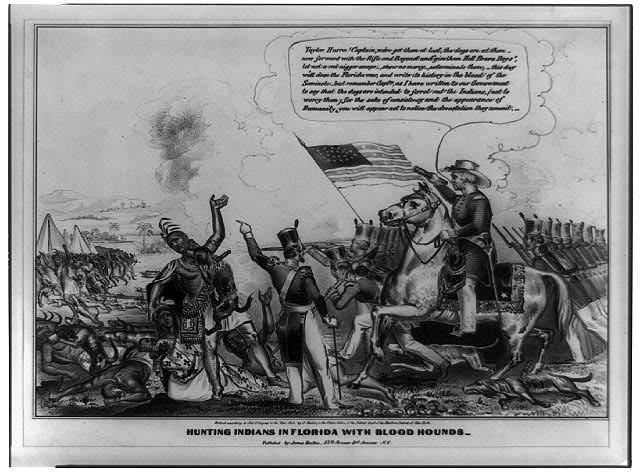
After a lot of loss and bloodshed, General Jesup came to an agreement with some Seminole families that if they agreed to stop fighting and depart for Indian Territory, they would be allowed to keep their "slaves." Indeed, the Seminoles had refused any negotiation attempts which did not include the guarantee of their allies' freedom to accompany them to Indian Territory. Weary of the fighting that would continue if this concession was not made and hounded by white slavers already trying to claim the lives and labor of those who'd escaped them, army officials under General Jessup's orders hurried Seminoles and Black Seminoles onto steamships to cross the Gulf of Mexico as quickly as possible.
Removal to Indian Territory
Though not as long as the transatlantic crossings, the ships were packed just as inhumanely. Many babies and young children died in transit across the gulf while many elders were left behind in Tampa to die alone. Those who survived continued the journey through New Orleans, up the Mississippi River, and to their designated slice of land in Indian Territory.