Alliance and Tribute
For as long as there existed slavery in the United States of America, there existed people who self-emancipated from it. Successful pathways to freedom were limited by things like geography and food sources as well as the politics of potential allies and enemies on both an individual and a national scale. For the ancestors of the people who would eventually become known as the Negros Mascogos, the pathway to freedom pointed them south, to the marshlands of Florida.
Claimed by Spain, which did not have the resources to thoroughly dominate the area, Florida was still largely controlled by its native communities, including Creek peoples and a confederate offshoot of the Creeks who called themselves the Seminoles. In the 1700s, Seminole leaders such as Chief Payne and his brother Billy Bowlegs began offering official refuge to people escaping colonial slavery.
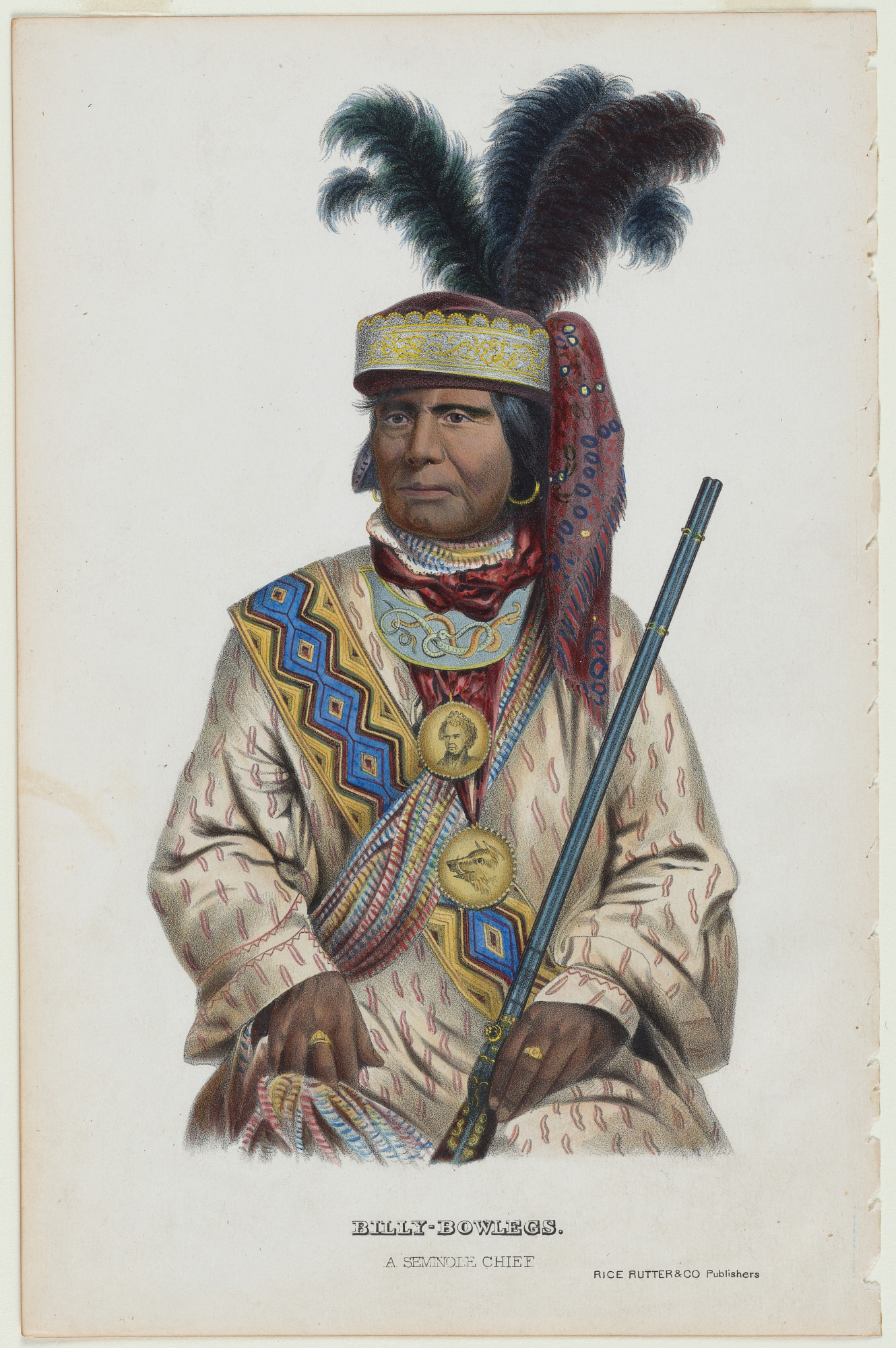
The Seminoles did not harbor refugees of slavery without compensation. In exchange for a place to live where they would be unbothered, the descendants of West Africans entered into a political relationship with Seminole leaders similar in some ways to a feudal system. The relationship was one which also came with the loaded term “slave.” This so-called “slavery” to Seminole families was nothing like the chattel slavery they had just escaped from, however. Some described it as sometimes more akin to adoption, or a tribute relationship. At other times it was more accurately described as a protector and ward dynamic. The Seminoles provided specific areas for escapees and their descendants to build their own self-governed villages and in exchange those villages supplied the Seminole family which had allotted them the land and its inherent protection with some of the food and goods their villages produced. For many years, this was how the two populations functioned together. There was some intermarriage, but first and foremost they operated more as an alliance of distinct small villages than as a single community.